

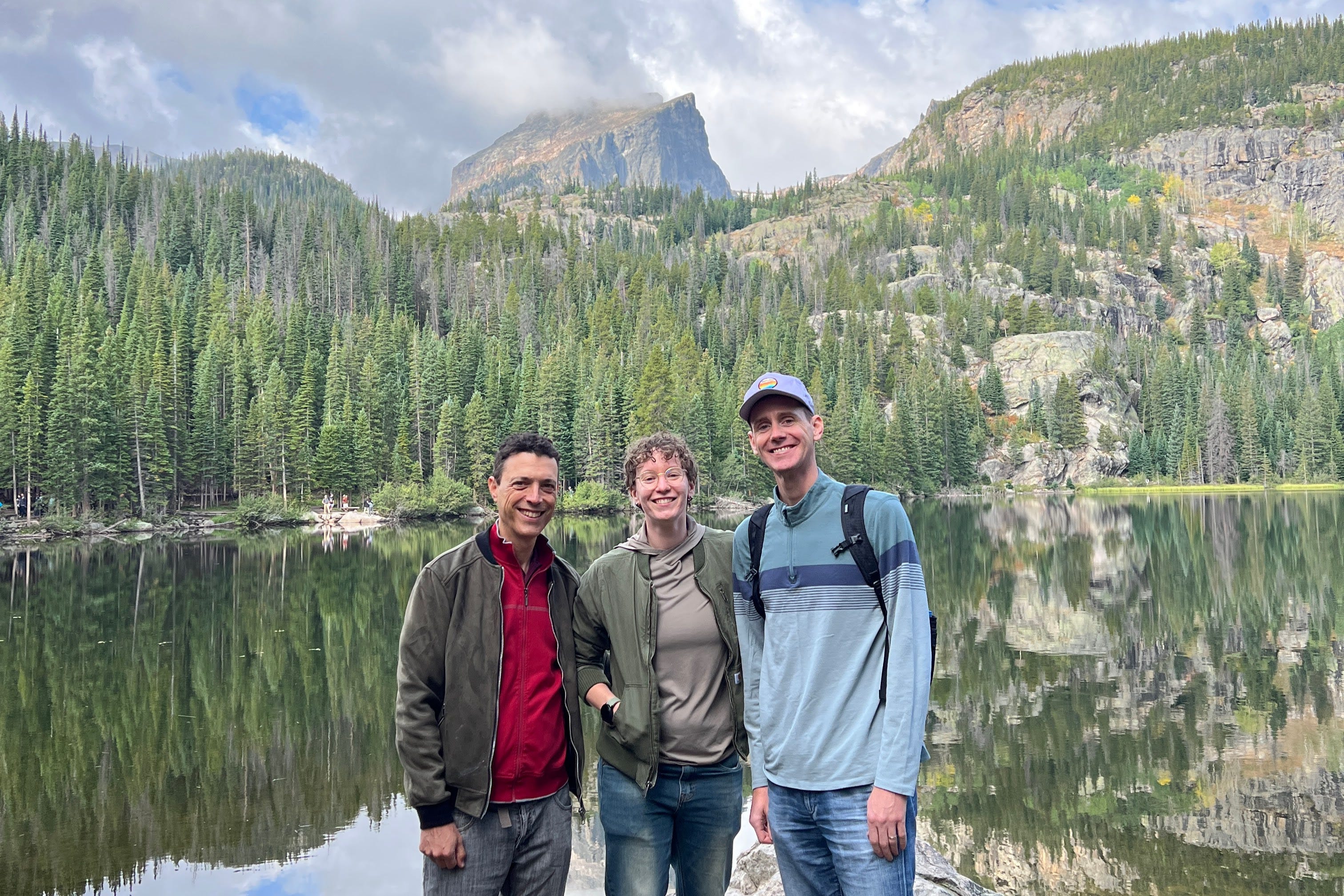
We first planned to go to Rocky Mountain National Park a few years ago but the week prior, we both came down with COVID and had to cancel. Postponing the trip to this past Labor Day weekend turned out for the best, however. During that time, we became friends with someone who works at the park! So when it came time to reschedule our trip, we made sure to include Jess. Seeing the park with a local added so much to the experience. Read on for how this unique location has also shaped my recent art making.
A LITTLE HISTORY
Rocky Mountain National Park lies about 90 minutes northwest of Denver, in a region that was originally home to Ute and Arapaho tribes. After President Thomas Jefferson purchased the Louisiana Territory from France in 1803, fur trappers, miners, explorers, and homesteaders migrated west. The gold rush of the1850s spurred new waves of settlers to this part of present-day Colorado.
After the turn of the 20th century, a new conservation and preservation movement emerged. President Woodrow Wilson signed the Rocky Mountain National Park Act on January 26, 1915, officially establishing the park at 360 square miles. The park sees millions of visitors each year, many traversing from east side to the west side on the highest continuously paved road in North America. At its high point, Trail Ridge Road reaches an elevation of more than 12,000 feet.
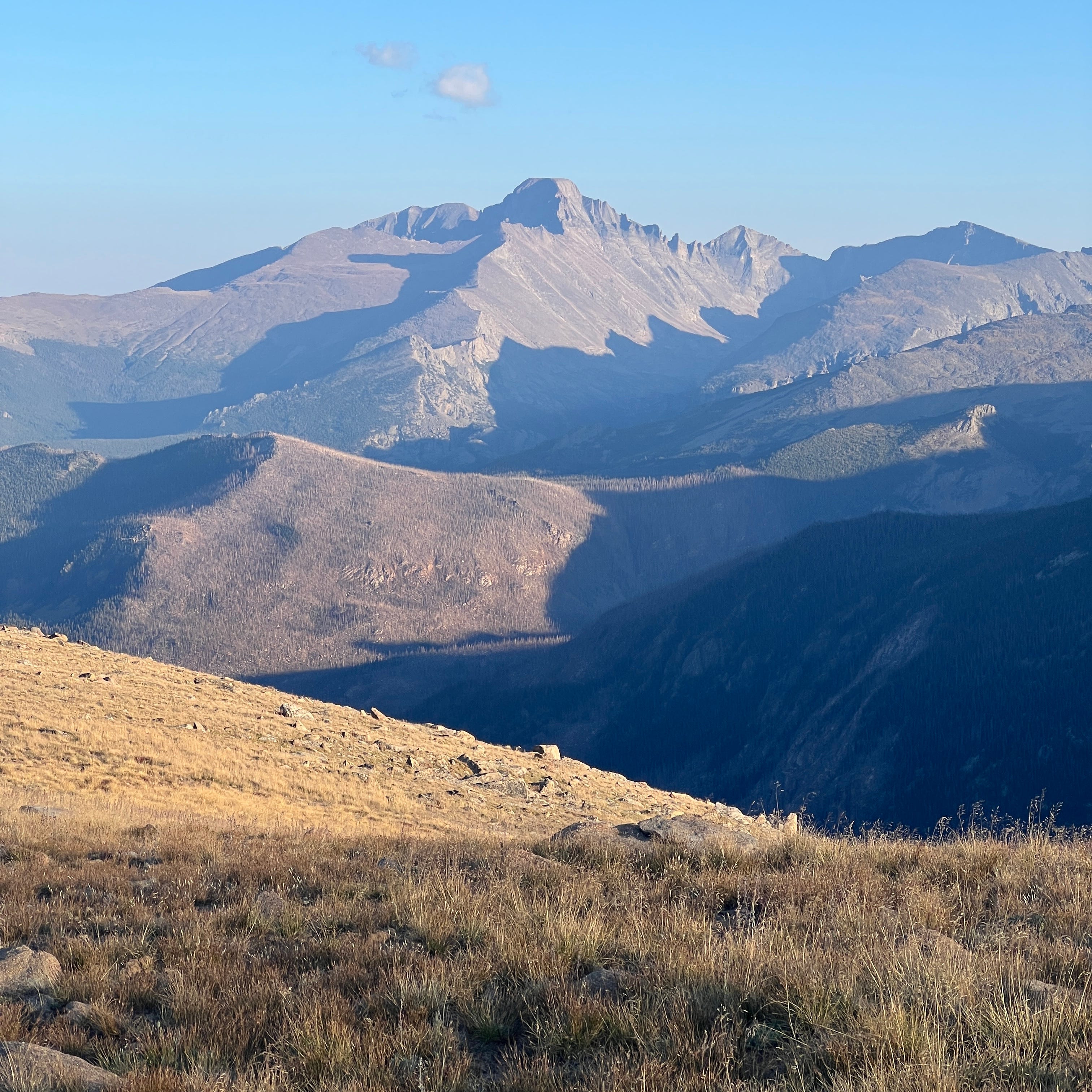
The alpine landscape found at this elevation was new to me. The small, fragile plant life grows slowly. At the same time, the views are unobstructed. We benefitted from mostly clear skies and very little rain across four days in the park.
PAINTING MOMENTS
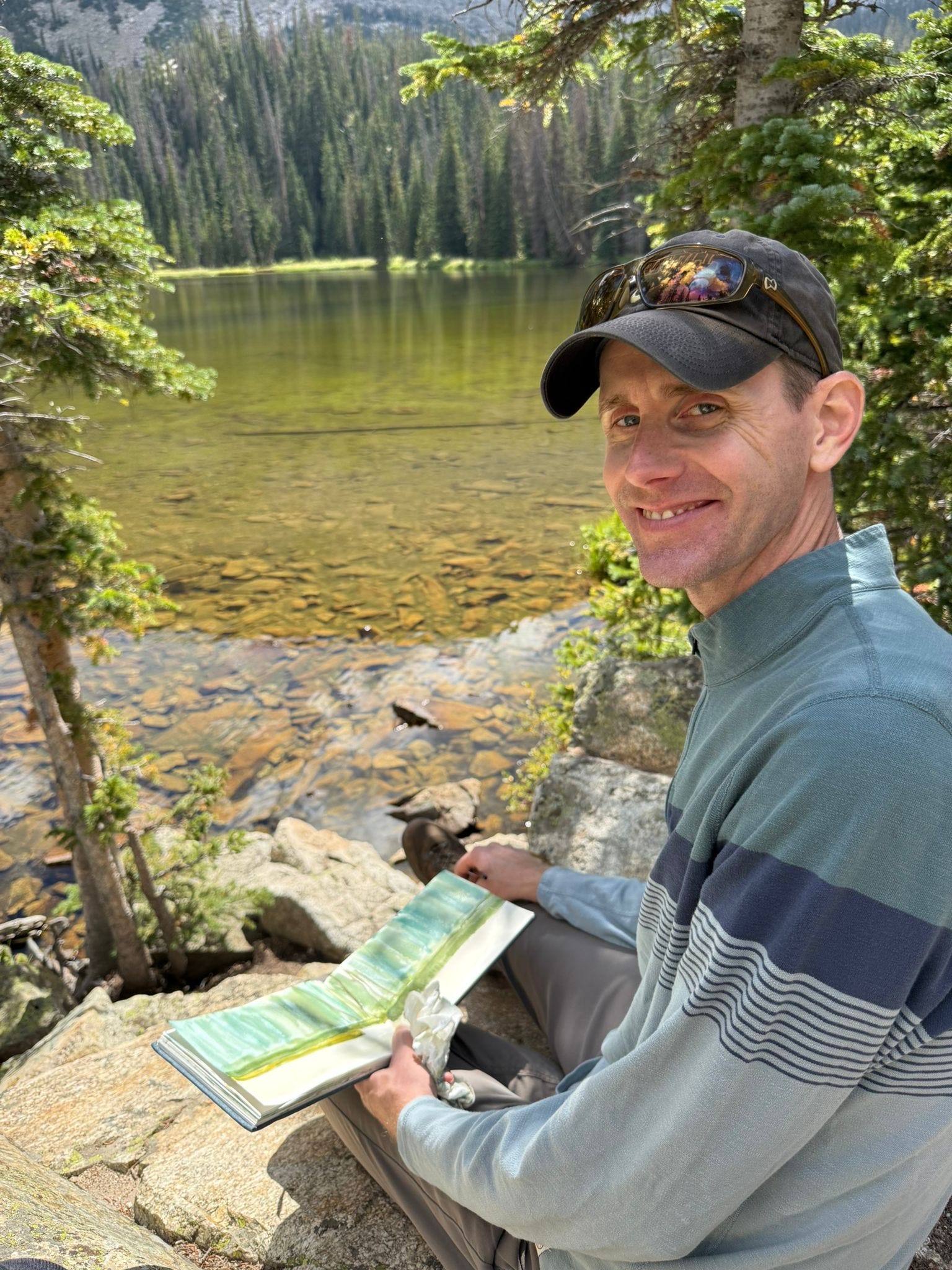
I’ve found it challenging at times to hike and paint. I only carry a few small watercolor supplies, which don’t take up much space, and are not heavy. But about 8 times out of 10, I hike around with these paints all day and never pull them out. On longer day hikes there is some time pressure to get back by a reasonable time. Stops are for snacking, not necessarily painting. And the landscape can be be so big that it takes extra attention and effort to focus on a small slice that will fit the pages of my tiny sketchbook. My fellow hikers (most often my loving husband) are always supportive and encouraging, but I also feel a little too self-aware. At one point, I managed to pull out the paints along this beautiful lake. I focused on the trees meeting the water’s edge in the far distance. It was good practice to find an area of focus within the vast landscape.
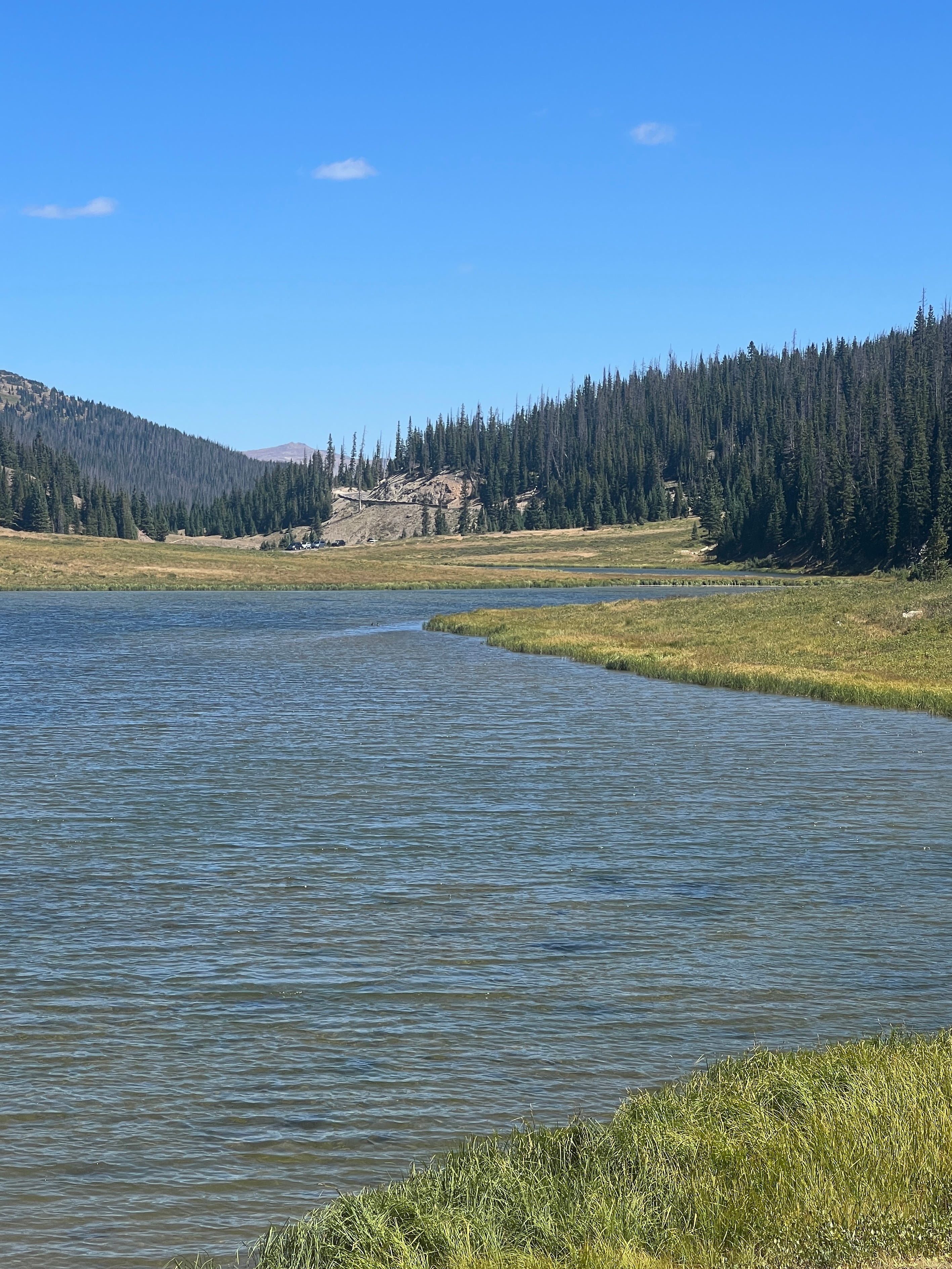
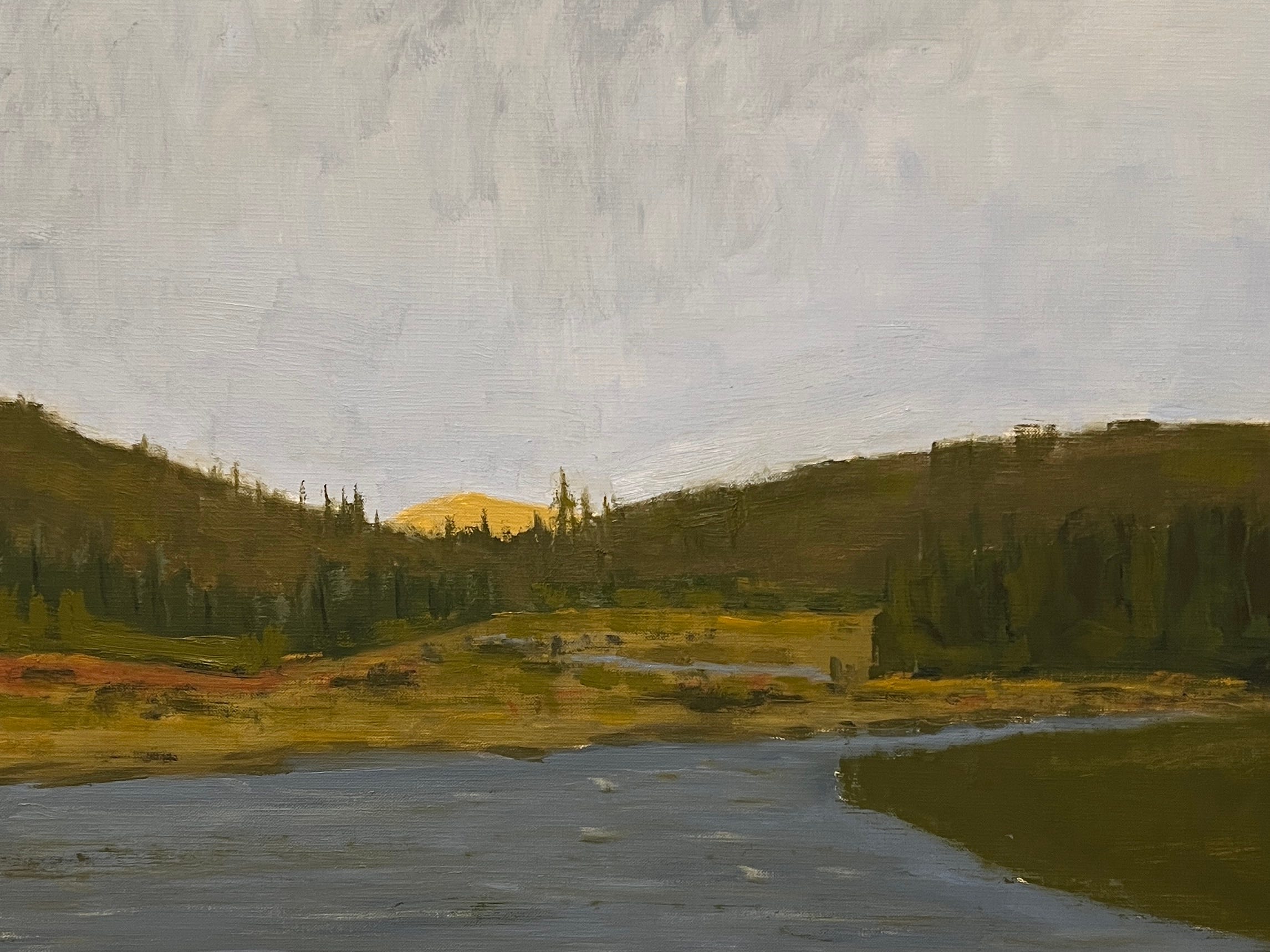
The continental divide passes through Rocky Mountain National Park. As we drove from the east side of the park to the west side one day, we passed through this area below. In recent weeks I have painted from this photo on a 16 x 20 inch piece of canvas paper.
I’m happy with some of the shapes in my painting. The size and color are nicer to see in person, in my opinion. When seeing my painting alongside the reference photo, I’m also thinking more about the color of the sky. I won’t paint any more on this piece, but may do another at some point in the future.
ALFRED WANDS
I’m always on the look out for interesting artwork, and one of the park visitor centers had a piece that caught my attention.
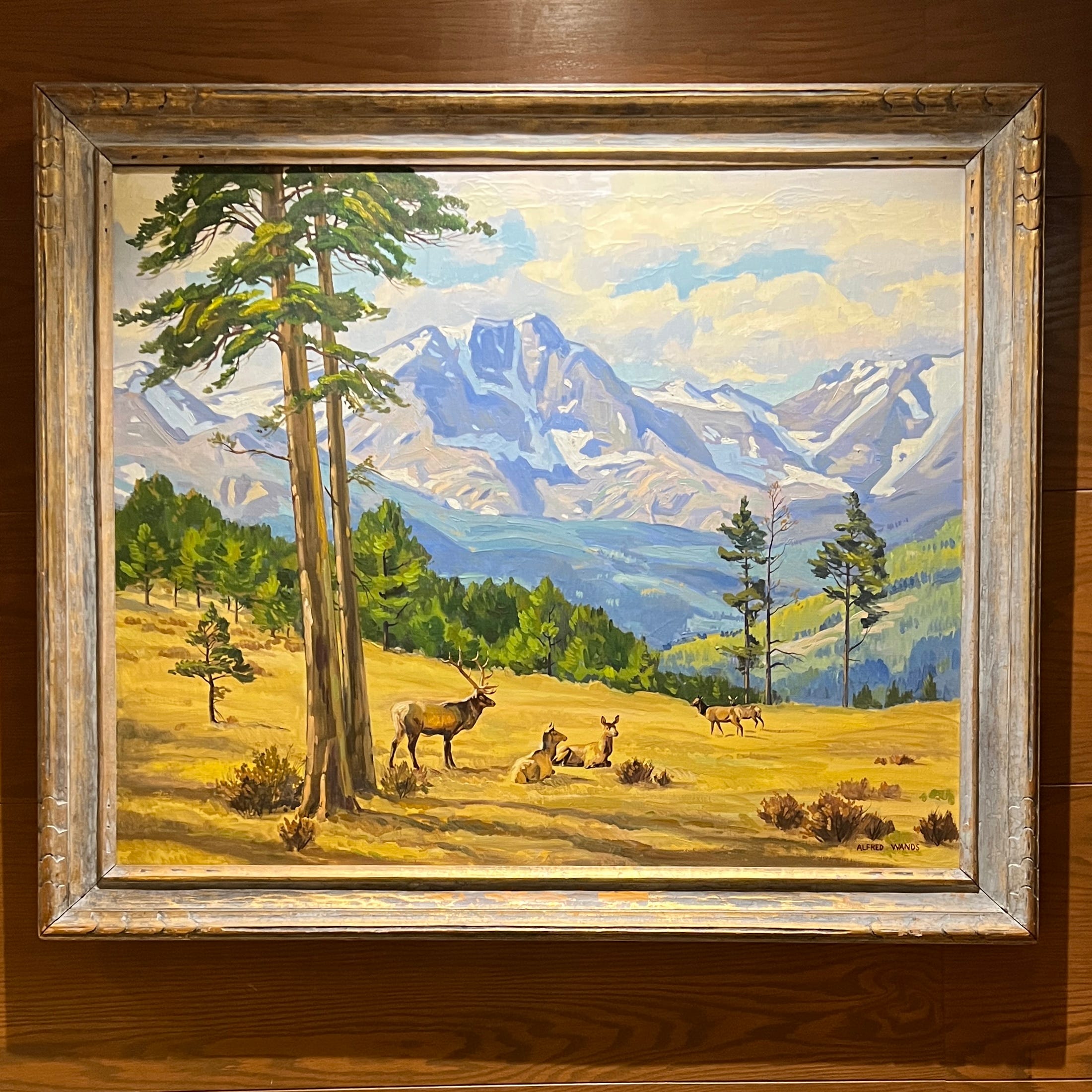
The artist, Alfred James Wands (1904–1998) was an American painter best known for his vibrant landscape paintings, particularly of the Colorado Rockies and Rocky Mountain National Park. Born in Cleveland, Ohio, Wands graduated with honors from the Cleveland Art Institute, and pursued further studies in Paris at the Académie Julian, as well as in Brussels, Munich, and at Western Reserve University (Case Western today).
Wands settled in Colorado, and his work influenced a generation of Western landscape artists. His legacy continued through his family, with his son Robert Wands also becoming an artist in Colorado. Wands’s paintings are recognized for their atmospheric use of color and light, conveying the grandeur of the Rocky Mountains. I’ll be keeping an eye out for more of both Wands the elder, and Wands the junior. As I have read and researched a little more about these two artists, I found that Robert Wands recently passed away at the end of October, aged 86.
Not all of the national parks are equal when it comes to wildlife. Yellowstone is of course the best, and it’s hard not to compare others to it. But here are a few of the animals we saw in the park. The moose were the most surprising. There were so many. We knew there would be elk, but we saw more than one moose almost every day.


Thanks for reading, and feel free to leave notes comments below. I’ll keep you posted on what I get up to art-wise in the coming month.
Not personally underwhelmed !!